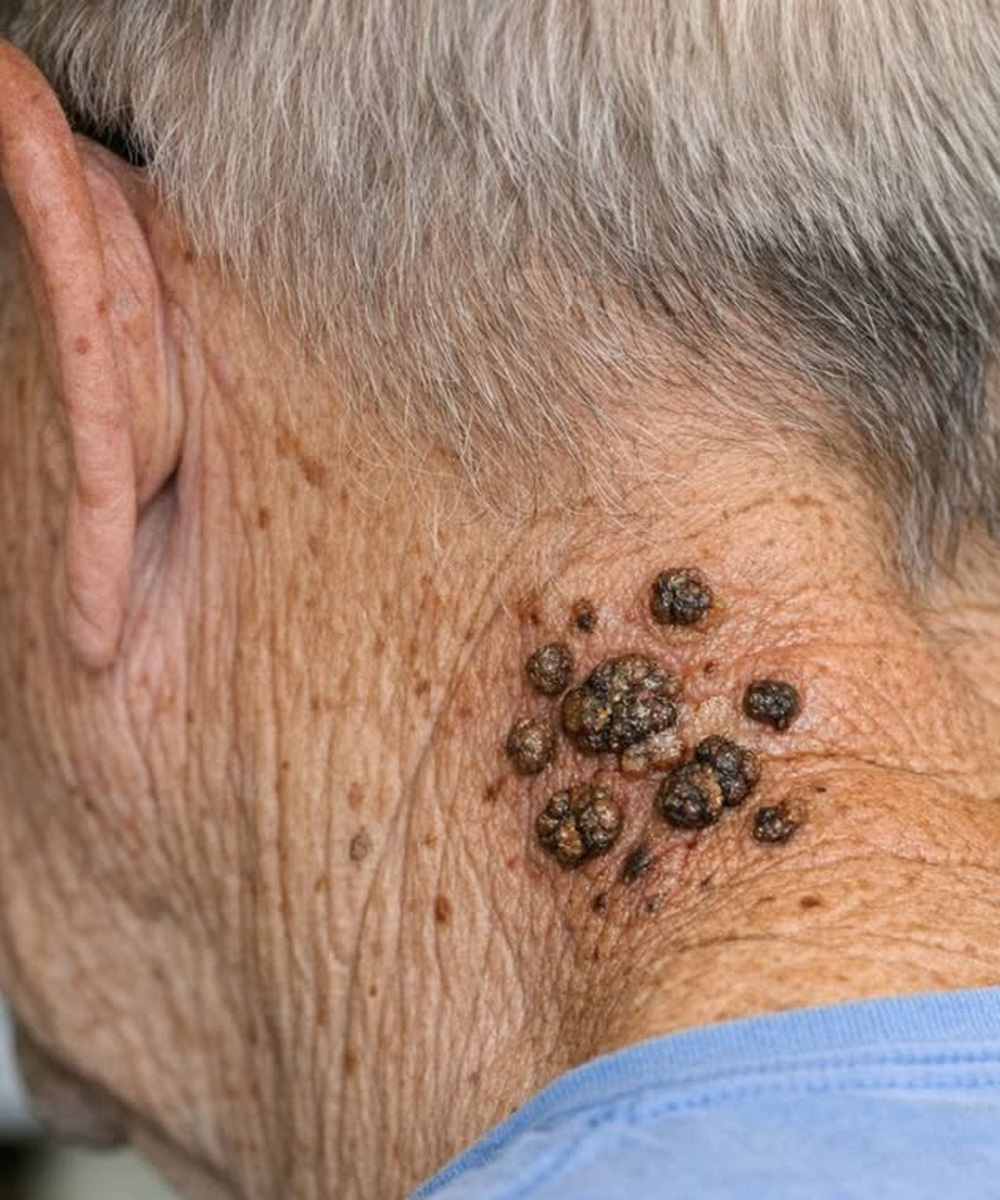
7. How Dermatologists Confirm The Diagnosis
Doctors can often diagnose seborrheic keratosis simply by examining the growth. Dermatologists may use a dermatoscope—a handheld magnifying device—to view the lesion more closely. If the growth appears unusual, a biopsy may be performed. This involves removing a small piece of tissue for examination under a microscope to ensure it is not cancerous.
8. Treatment Options: From Freezing To Scraping To Lasers
Treatment is not always required unless the growth causes discomfort or cosmetic concerns. Common methods include cryotherapy, in which liquid nitrogen freezes the growth, or curettage, where it is gently scraped away. Laser treatments can also remove the lesion by vaporizing it. These procedures are generally quick and performed in a dermatologist’s office, with minimal downtime.