ADVERTISEMENT
Semiotics of translation: what is lost and gained
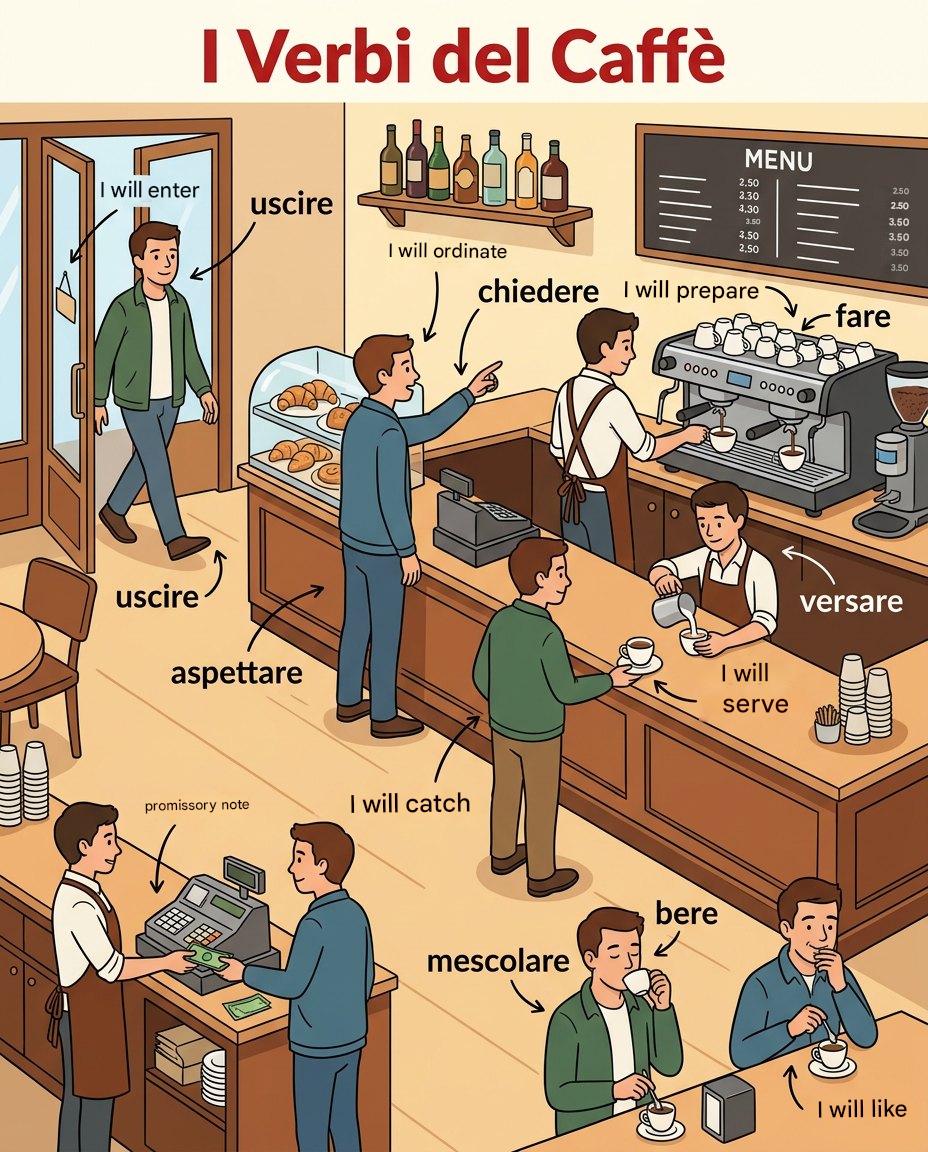
The image translates Italian verbs into simple English phrases (“I will serve,” “I will prepare”), but translation is not neutral. The English glosses add future-tense phrasing that may differ from the infinitival Italian verbs pictured; this can be pedagogically useful (teaching tense patterns) but may also obscure infinitive uses. Moreover, cultural specificity gets flattened in translation: verbs carry connotations and collocations that a one-to-one gloss cannot fully convey. For instance, chiedere in Italian encapsulates forms of politeness and directness that vary by context; direct translation as “I will ordina(te)” (note: the image’s English contains a small spelling error) misses pragmatic shading. A deeper lesson for learners is to use images as starting points, then expand into listening practice and real-world interactions to grasp nuance.
