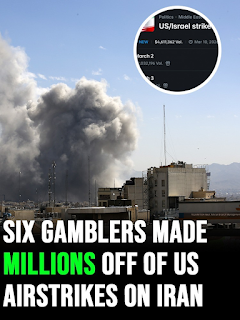
Many people around the world have made huge amounts of money betting on the war in Iran — and now politicians and watchdogs are sounding the alarm.👇🏻⬇️more in the 1rst comments ⬇️👇🏻

ADVERTISEMENT

These tensions sparked outrage online and among user communities, many of whom likened the platforms to a dystopian marketplace where human suffering becomes an investment.

C. Lack of Regulation
Unlike traditional gambling and financial markets, prediction markets like Polymarket operate in a regulatory gray area. Polymarket is largely offshore and not fully under U.S. financial regulatory oversight, despite handling large sums of capital.

Kalshi, by contrast, is regulated by the U.S. CFTC but has strict rules about not offering markets tied directly to death or violent conflict — yet still faced lawsuits and scrutiny over how it handled the Iran bets.

4. Political and Regulatory Backlash
The betting activity did not go unnoticed in Washington and other capitals.

Leading voices in the U.S. Congress, including Senator Chris Murphy (D-Conn.) and Representative Mike Levin (D-Calif.), condemned the markets as morally objectionable and possibly enabling insider profiteering. Murphy notably described the situation as “insane this is legal.”

Lawmakers called for new regulations or outright bans on using prediction markets to wager on military action, arguing that these platforms currently allow individuals to profit from advance knowledge of national security decisions.

Leave a Comment