ADVERTISEMENT
They Ignored Him for Years, Then Fought Over His Love Too Lat
The people who ignored my father for eleven years fought over his photo at the funeral and called it love. “Put that down,” I said, when my aunt reached for the framed picture from his nightstand.
“I’m his sister,” she whispered, already crying. “I just want something to remember him by.”
Something to remember him by.
For eleven years, my father lived alone in a one-story house at the edge of town with a bad knee, a weak heart, and a phone that almost never rang.
He used to keep it beside his recliner anyway.
Like hope had a battery life.
Most Sundays, nobody did.
Cars lined both sides of the road.
Cousins I hadn’t seen in years came walking in with casseroles, flowers, folded faces, and stories about how much he meant to them.
A woman from church dabbed her eyes and said, “He never complained.”
That part was true.
He didn’t complain when the doctor added another pill he couldn’t really afford.
He only said, “Guess we can keep each other company.”
That was my father.
He made loneliness sound polite.
The last year was the worst.
He started forgetting where he left things.
Then he started forgetting whole afternoons.
He’d stand in the hallway and ask if it was Monday, even when the football game was already on and the sun was going down.
I asked family for help more than once.
Just a visit, I said.
An hour, I said.
Sit with him while I run to the pharmacy. Watch him while I go to work. Bring him peach pie. Tell him an old story. Let him feel like he still belongs to somebody besides me.
Everyone had a reason.
Too busy.
Too far.
Too much going on.
Maybe next week.
There is always a next week when death still feels far away.
Then one Tuesday morning, I found him asleep in his chair with the television flickering and his hand resting on the phone.
Not gripping it.
Just touching it.
As if even at the end, some part of him still thought it might ring.
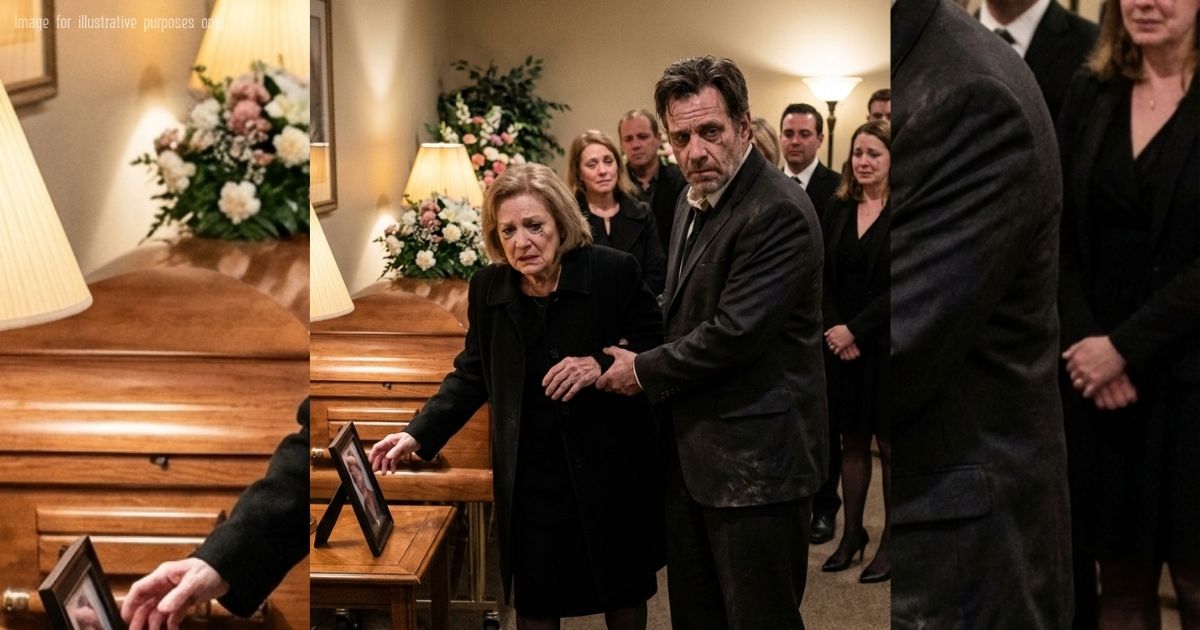
At the funeral home, they called him “beloved.”
I almost laughed.
Beloved by who?
By the son who came twice in ten years and now cried so hard he had to sit down?
By the brother who told everyone, “We were close,” though he hadn’t learned Dad’s new address until he needed it for the obituary?
By the granddaughter posting old pictures online with “Fly high, Grandpa,” when she had ignored every birthday card he mailed with twenty dollars tucked inside?
I know grief is messy.
I know guilt can sound like love when it comes out shaking.
But standing there, listening to people praise the man they couldn’t make time for while he was still breathing, something in me broke open.
Not because they came.
Because they came too late.
One woman touched my arm and said, “At least he knew he was loved.”
I stared at her for a long second.
Then I said, “He knew I loved him.”
She let go of my arm after that.
The room got quiet in little pockets.
You could feel it moving from person to person.
Not anger.
Recognition.
Because almost everybody in that room had someone they had not called back.
Someone they kept meaning to visit.
Someone whose number they saw on the screen and thought, I’ll get them tomorrow.
My father used to tell me stories about his own mother.
How she kept hard candy in her purse.
How she could stretch one chicken into three meals.
How she never left a goodbye unsaid because she had buried too many people too young.
“Love people while they can still roll their eyes at you,” he once said. “That’s the only time it counts.”
I didn’t understand how hard that line would land until I was standing beside a polished box full of silence.
After the service, people hugged me like they were trying to make up for years in five seconds.
Some asked what they could do.
Some said, “I wish I had known.”
But they did know.
That’s what made it hurt.
They knew he was old.
They knew he was alone.
They knew time was doing what time always does.
They just thought they had more of it.
That night, after everybody left, I went back to his house and sat in the recliner.
His phone was still on the side table.
Three missed calls.
Two from relatives.
One from a number I didn’t know.
I stared at it until the screen went black.
Then I said out loud, to nobody and to everybody, “Don’t wait for a coffin to make you kind.”
Because flowers at a funeral are beautiful.
But they are still not a visit.
And regret, no matter how loud it cries, is not the same thing as love.
Part 2
The phone rang while I was still staring at his dead screen.
For one foolish second, my heart lifted.
I reached for it before my mind could catch up, like grief had hands faster than sense.
“Hello?”
A woman’s voice came through, calm and practiced, with the kind of softness people use when they know they are stepping into fresh loss.
“Is this Ray Lawson’s child?”
My throat tightened around the word.
“Yes.”
“My name is Miriam Bell. I’m calling from Bell & Acre Legal. Your father asked me to contact you the evening after his funeral.”
I looked at the dark television.
The recliner.
The flannel still hanging over the back of the kitchen chair.
“He what?”
“He left specific instructions,” she said. “He was very clear about the timing. He said not before the service. Not during. After.”
My fingers curled tighter around the phone.
“What kind of instructions?”
“A letter. A recorded statement. And some documents that need to be read in the presence of immediate family.”
Of course.
Even dead, my father had somehow managed to sound more organized than the rest of us living.
I closed my eyes.
“When?”
“Tomorrow morning, if possible.”
I almost said no.
Not because I didn’t want to know.
Because I already had a bad feeling that whatever my father had left behind was not going to let anyone stay comfortable.
And comfort was what half the family had shown up looking for.
Comfort, absolution, a framed photo, a casserole pan to carry home and tell themselves they had done their part.
“Tomorrow’s fine,” I said.
There was a pause.
Then Miriam Bell said, “He also told me to tell you something word for word.”
I sat up straighter.
She cleared her throat.
“He said, ‘Do not let them turn me into a story that makes them feel better.’”
I stared at the blank wall for so long the room started to blur.
That sounded exactly like him.
Not dramatic.
Not bitter.
Just plain enough to hurt.
After I hung up, I stayed in the recliner another hour with his phone in my lap.
It was heavier than I remembered.
Maybe because I knew now it had carried more than missed calls.
It had carried waiting.
It had carried years of being almost remembered.
It had carried the hopeful little lie a lonely person tells himself when he sets the volume high.
Somebody might call.
I turned it over in my hand and thought about all the Sundays he shaved for company that never came.
All the little acts of dignity people mistake for doing fine.
He never begged.
That was the problem.
People are more comfortable abandoning you when you make it easy.
The next morning, I drove to Bell & Acre Legal in the same shirt I had slept in under a coat that still smelled faintly like the funeral home.
The office sat in a brick building downtown between a florist and an empty storefront with paper taped over the windows.
There was a bell over the door.
It made too cheerful a sound for the day I was having.
