ADVERTISEMENT
Maybe grief makes weather meaner.
Sun coming through the dusty glass.
Same old dent in the wall.
Different silence.
I held his notebook in one hand and the phone in the other.
I called everyone.
Lorraine.
Cousins.
Even the nephew who had called him a second father over a coffin.
No one asked why.
Not this time.
When they were all here, I set the hard candy out and stood by the table.
My father hated speeches from people who had not earned them.
I just held up his notebook.
“This stays closed tonight,” I said.
A few of them looked startled.
Then I set it down again.
“We know what’s in it. That’s enough.”
Cal nodded first.
Then Tessa.
Then Lorraine.
We ate pot roast and green beans and too much pie.
We told true stories.
Not the polished funeral kind.
The real kind.
The time Dad backed the truck into his own trash cans and blamed the slope of the driveway.
The way he sang one wrong line of every hymn with total confidence.
The time he fixed Cal’s carburetor with a butter knife because he didn’t want to miss supper.
The way he always split the last biscuit in half even when he was hungrier than he admitted.
That was love too.
Not regret in a dark suit.
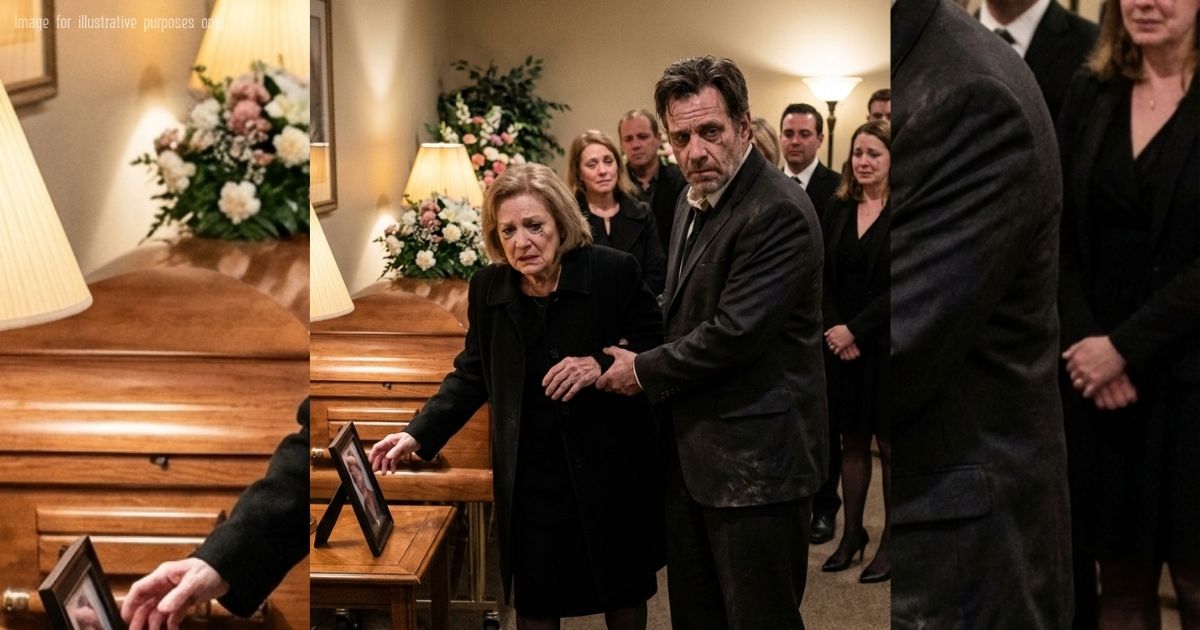
Not flowers around a box.
Memory earned by presence.
Halfway through dessert, Tessa looked around the table and said, “We almost turned him into a man we only appreciated once other people were looking.”
No one argued.
Because she was right.
That was the whole disease, wasn’t it?
Performing devotion in public while rationing it in private.
Wanting the image of being loving without the inconvenience of having to regularly prove it.
My father had cut through that with one brutal act of clarity.
He had left the house to the person who had stayed.
And in doing that, he had forced everyone else to stop confusing sentiment with service.
It didn’t fix everything.
Families aren’t engines.
You do not replace one part and get a smooth ride.
There were still weird holidays.
Still old resentments.
Still pauses on the phone where blame sat down between words.
But something fundamental had changed.
We no longer got to pretend that love alone was enough.
Not if it never took the shape of a visit.
Not if it never made room in a week.
Not if it arrived carrying flowers and left before the dishes.
Late that night, after they all went home, I stood on the front porch with my coat pulled tight and looked down the dark road.
The driveway was empty again.
But not the same kind of empty.
This one had been used.
It had held arrivals.
That matters.
Inside, the phone began to ring.
Not his old one.
Mine.
Celia.
I answered.
“Everything okay?”
She laughed softly.
“Fine. Ms. Greer wanted me to remind you tomorrow is your turn to call Mr. Hollis. He says if you forget, he’ll haunt your porch.”
I smiled into the dark.
“Tell him to get in line.”
After I hung up, I stayed outside another minute listening to the night settle over the yard my father once scanned every Sunday for a car that rarely came.
Then I went inside.
I passed the recliner.
Touched the back of it once.
And said, to the quiet house and the man still living in its bones, “They’re calling now.”
The room said nothing back.
It didn’t have to.
Some truths do their best work after the talking stops.
My father had been right.
Flowers at a funeral are beautiful.
But they are still not a visit.
A tribute post is still not a ride to the doctor.
A crying fit in a chapel is still not an hour spent at a kitchen table while someone old tells the same story twice because what they really want is not to be corrected.
It is to be accompanied.
That was the line my family had crossed too late.
And then, by grace or guilt or plain human decency finally waking up, it was the line some of them found their way back over while there was still time to matter somewhere else.
That may not be a perfect ending.
I don’t trust perfect endings much anymore.
But it is a true one.
And truth, I learned in the house of a man who kept records because loneliness can make a person doubt his own eyes, is sometimes the kindest inheritance you can leave behind.
Not money.
Not property.
Not polished memories.
Truth.
Truth, and a table big enough for people to do better before the next coffin gives them an audience.
