ADVERTISEMENT
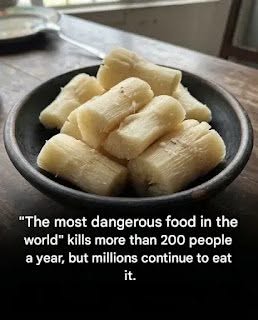
Cassava, cultivated primarily in Africa, Asia, and South America, is much more than just an ingredient. For many rural communities, it represents a true source of food security. Easy to grow, resistant to poor soils and periods of drought, it stands out as a reliable solution when other crops fail.
A robust plant… but not without its peculiarities
What is often overlooked is that cassava has a natural defense system. It contains compounds called cyanogenic glucosides. These substances, naturally present in the plant, can become problematic if the food is not prepared properly.
This does not mean that cassava is inherently dangerous. Quite the contrary: when processed correctly, it is perfectly safe and nutritious. The real issue lies in how it is processed before being consumed.
Why preparation is an essential step
ADVERTISEMENT
ADVERTISEMENT
