ADVERTISEMENT
The pieces are immersed in water for several hours to several days, depending on local traditions. This step is essential to reduce natural toxic substances.
-
Drying (optional depending on the use)
-
Prolonged cooking
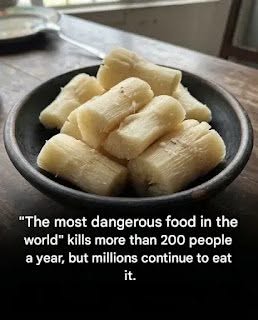
The cassava is then boiled, steamed, or prepared according to local recipes. This final step is essential to ensure its food safety.
But in everyday life, these processes can sometimes be shortened. Lack of time, economic difficulties, or food emergencies force some families to prepare cassava more quickly than recommended.
When an everyday food can cause a problem
Consuming improperly prepared cassava can lead to various health effects. In milder cases, it can cause digestive problems, dizziness, or a feeling of weakness.
But in more concerning contexts, particularly in cases of repeated and prolonged use, more serious consequences can arise. Among them is a rare neurological condition called konzo, which affects motor skills and coordination.
Better understanding leads to better consumption.
ADVERTISEMENT
ADVERTISEMENT
