ADVERTISEMENT
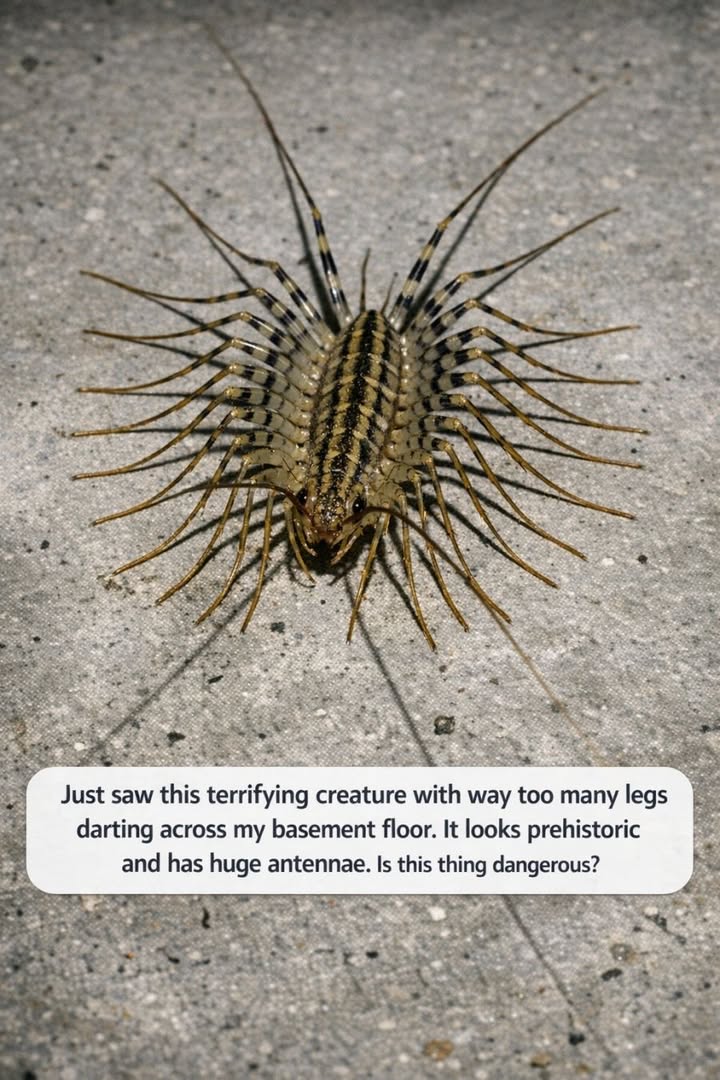
The long, whip-like antennae are sensory organs, allowing the centipede to detect vibrations and navigate through its environment efficiently. These features, combined with its rapid movements, create an impression of a creature that is both ancient and alien.
3. Is It Dangerous to Humans or Pets?
While the appearance of a house centipede might suggest danger, these creatures are generally harmless to humans and pets. House centipedes do possess venom, which they use to subdue their prey, but their jaws are not strong enough to penetrate human skin easily. In the rare event of a bite, the result is typically nothing more than a mild, localized irritation, comparable to a bee sting.
For pets, especially larger animals like dogs and cats, the threat is minimal. House centipedes are often more interested in avoiding confrontation than engaging with larger creatures. However, it’s always wise to monitor any interactions between your pets and local wildlife to ensure safety.
4. How Painful Is a House Centipede Bite—and How Common Are They?
ADVERTISEMENT
