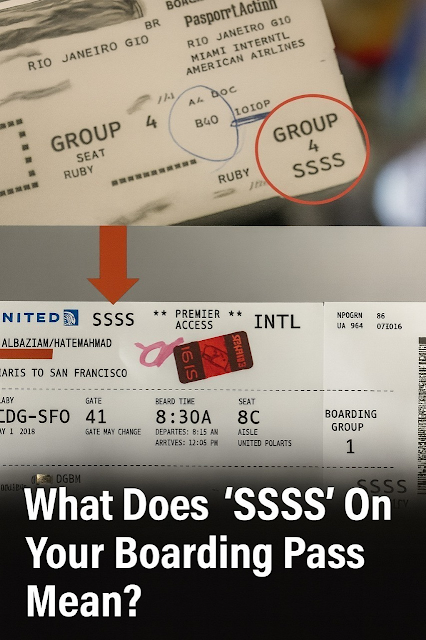
ADVERTISEMENT
Does not automatically affect visa applications
Does not mean you’ll be denied entry
However, repeated secondary screening combined with other immigration issues could increase questioning at borders.
Common Myths About SSSS
Let’s clear some things up.
Myth 1: “SSSS means I’m being followed”
Nope. It’s screening, not surveillance.
Myth 3: “Arguing with security will make it go away”
It will do the opposite. Be polite, calm, and cooperative.
How to Handle SSSS Like a Pro
If you see those four letters again, here’s how to survive it with minimal stress:
Pack neatly (messy bags slow inspections)
Stay calm and respectful
Don’t joke about security
Security officers aren’t trying to ruin your trip—they’re following a checklist.
It can feel:
Stressful
Unfair
Anxiety-inducing
Especially if other passengers are watching.
Remember:
You didn’t do anything wrong
You’re not alone
Thousands of people get SSSS every day
It’s an inconvenience, not a judgment.
Why SSSS Still Exists in 2026
Despite advancements in:
Biometrics
AI risk assessment
Trusted traveler programs
Secondary screening remains a cornerstone of aviation security because:
It introduces unpredictability
ADVERTISEMENT
