ADVERTISEMENT
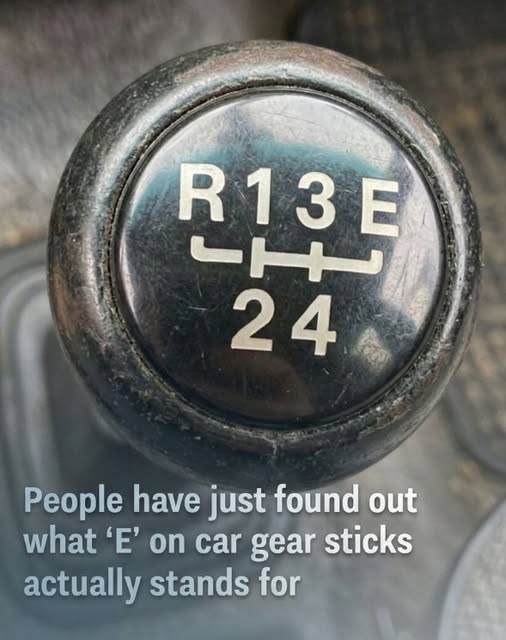
Why that era? The 1970s oil crisis (1973 and 1979) created a massive demand for fuel-efficient vehicles. Automakers scrambled to add fuel-saving features—including “Economy” mode on automatic transmissions.
How “E” Mode Actually Worked (The Mechanics)
Let me explain what happened inside the transmission when you shifted to “E.”
Standard “D” (Drive) mode: The transmission shifted at preset RPM points, balancing performance and fuel economy. The engine could rev higher before shifting.
The overdrive connection: In many cars, “E” was essentially an “overdrive on” mode. Overdrive is a higher gear that reduces engine RPM at cruising speeds, saving fuel. “E” engaged overdrive earlier and more aggressively.
The “E” button: Some cars didn’t have an “E” on the gear shift—they had a separate button labeled “Econ” or “Economy” on the dashboard. Pressing it changed the transmission behavior without moving the gear selector.
Reason #1: Electronic transmission controls. Early automatic transmissions were purely mechanical or hydraulic. The “E” mode was a simple mechanical adjustment. When computer-controlled transmissions arrived, they could optimize shift points continuously—no separate “Economy” mode needed.
ADVERTISEMENT
